OSINT Briefing Southwest 3
OSINT Briefing // Operational Sector: Sokolina Ridge – Krzywoń-Górna Rail Axis [49.812° N, 18.204° E]
Subject: Polish 18th Mountain Brigade Retrograde and Sustainment Pressure on Ocassian Ridge-Line Elements
Classification: Analytical Assessment / Order of Battle & Corridor Throughput Analysis
Polish Retrograde Fragmentation
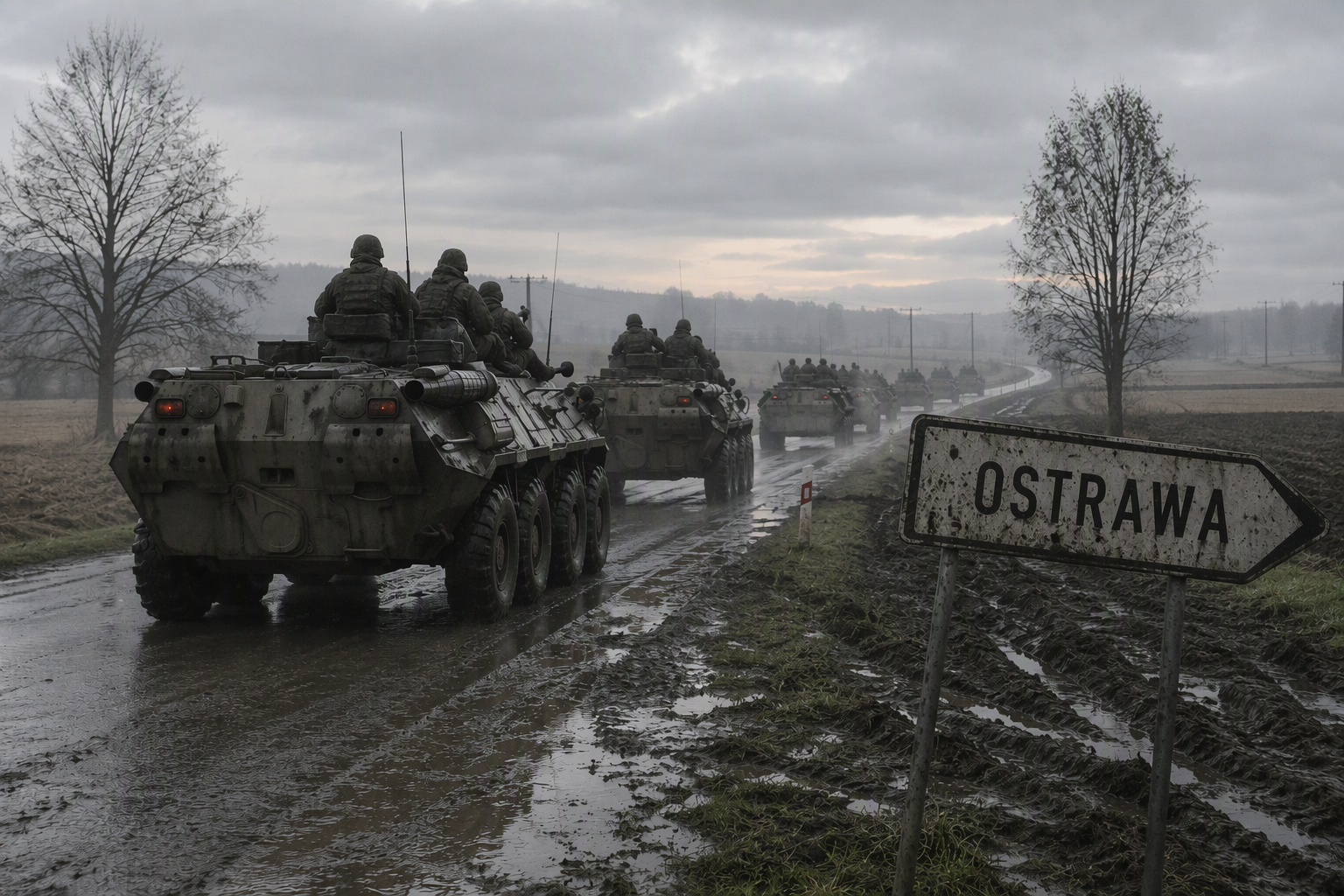
Movement indicators recorded between 21:15 and 23:00 local along the Sokolina-Głucha ridge and the Krzywoń-Górna rail corridor confirm continued degradation of Polish formation integrity. Elements of the Polish 18th Mountain Brigade and residual sub-units from the northern ridge belt are moving toward Malý Roudnik, the Zagorské Sedlo saddle bypass, and secondary trails into the Beskid foothills in separated tactical packets.
Column spacing along the ridge road is inconsistent. Rear-service vehicles are not moving in stable sequence with combat elements; two ammunition trucks were tracked as isolated stragglers three kilometers behind their parent company. Traffic control across the withdrawal corridor remains poor. Polish sub-units are reacting to immediate local pressure rather than operating under visible brigade-level synchronization.
-
Command Latency: Delayed execution of movement orders and irregular route selection indicate degraded command-and-control across the retreating force. At 22:40 a Polish reconnaissance platoon crossed its own artillery unit’s withdrawal route without coordination.
-
Formation Dispersion: Mountain infantry sub-groups are entering the Zagorské Sedlo saddle without unified convoy structure, complicating Czech identification and fire-control procedures for the 4th Rapid Deployment Brigade further south.
-
Residual Lethality: Despite disorder, these elements retain wheeled IFVs, Javelin-class anti-armor teams, MANPADS pairs, and towed 120 mm mortars. Their tactical behavior under pressure remains unstable and locally aggressive.
The practical result is corridor contamination: Polish military traffic is occupying road space required by Czech screening forces at Malý Roudnik for deployment, resupply, and controlled maneuver.
Ocassian Forward Pressure and Sustainment Friction
Ocassian spearheads continue to hold the operational rhythm on the ridge axis. Their movement remains concentrated against the Sokolina reverse slope, the Krzywoń-Górna rail junction, and the two culverts that feed traffic into the Zagorské Sedlo saddle. This pressure is forcing Polish sub-units into compressed withdrawal channels before they can establish a coherent rear line.
The limiting factor is now sustainment velocity.
-
Ammunition Continuity: Forward elements of the 214th and 219th Assault Battalions are already reporting ammunition strain. The issue is visible in artillery-linked fire missions, anti-armor reload cycles, and drone-supported strike packages. Fire density cannot remain at current levels without accelerated replenishment from the Kholmichany depot.
-
Fuel Distribution: Lead armor units are waiting longer for fuel delivery as tanker cycles fall behind the pace of maneuver on the ridge road. These delays are producing short operational pauses at the forward edge and reducing continuous pressure on withdrawing Polish elements.
-
Recovery Backlog: Damaged and mobility-killed platforms are accumulating behind the spearhead. Recovery vehicles and maintenance teams are slower than reconnaissance and assault elements, especially on the switchback climb north of Wilcza Poręba.
-
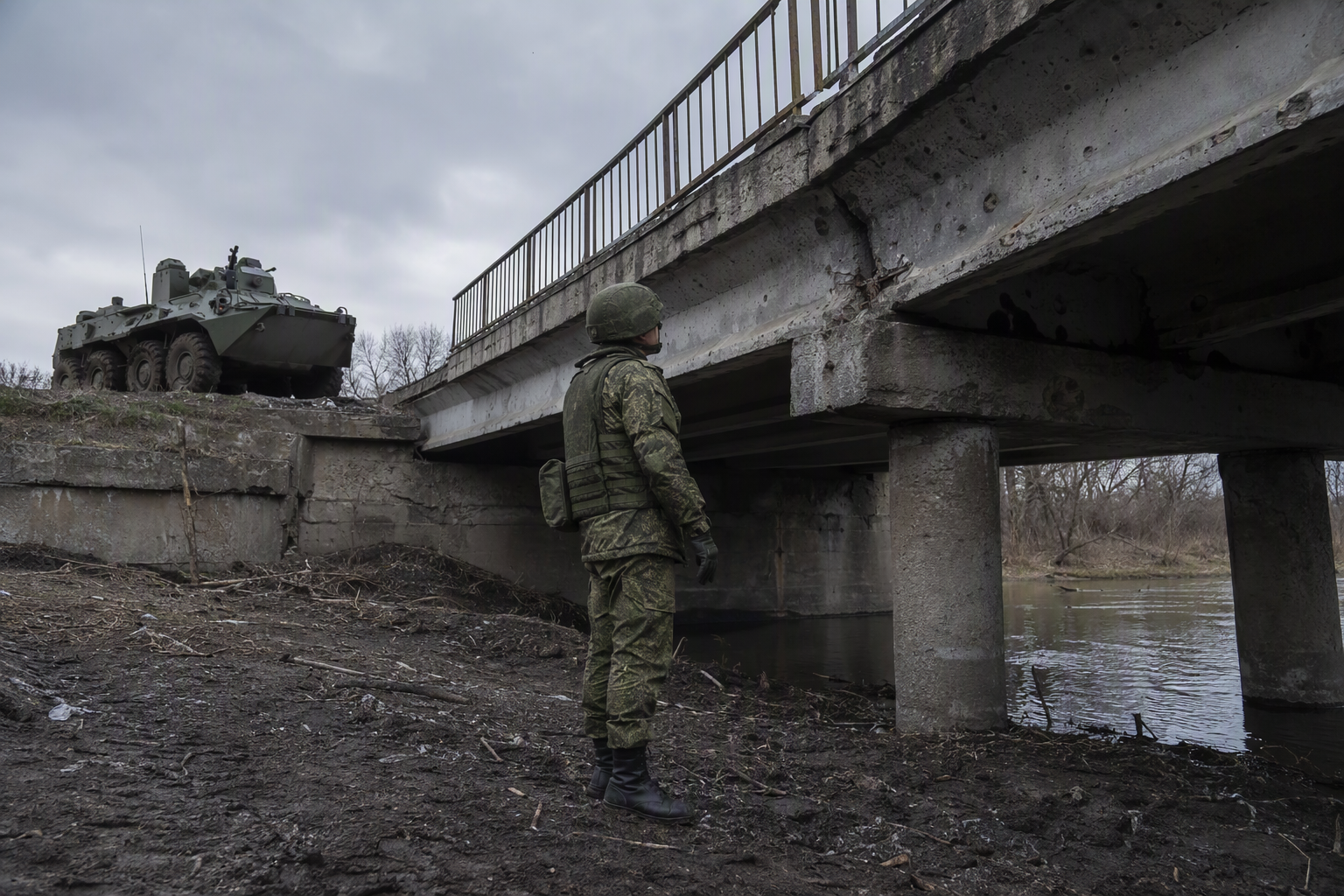
Engineer Bottlenecks: Bridge inspection at the Krzywoń-Górna underpass, culvert clearance, shoulder reinforcement, and bypass preparation across the saddle are becoming critical. Heavy vehicles are increasingly dependent on verified crossing points and prepared surfaces.
-
Forward Control Load: Rapid movement through mixed military traffic on a narrow ridge road is increasing identification friction. Polish remnants, Czech forward observation posts, Ocassian recon detachments, and diversionary threats are now operating inside overlapping route networks.
The operational requirement is direct: advance tempo must be matched by ammunition, fuel, engineer, and recovery tempo. If supply intervals widen, Ocassian pressure will drop. Even a limited pause gives Polish and Czech forces time to mine approaches, organize anti-armor screens, pre-register fires on the ridge road, and harden the Malý Roudnik roadblock.
Assessment
Polish command cohesion continues to deteriorate, and the Czech 4th Rapid Deployment Brigade is absorbing the consequences inside a narrow saddle corridor. Ocassus retains initiative, but the next 24–48 hours will be decided by sustainment discipline behind the spearhead. Ammunition strain, fuel delays, recovery backlog, and engineer bottlenecks are now measurable constraints on the pursuit. If these systems fall out of sequence, the defender gains time to stabilize the next line at Malý Roudnik.