A receipt written in blood at Sokolina
The reckoning after the night assault on Sokolina-Głucha
The sky over the Krzywoń-Górna hollow is grey as a greatcoat, and the guns only fell silent around five in the morning. But the silence that took their place is worse than any shellfire — because it stands over the rows of stretchers.
I will say it plainly, since no one in the offices upstairs will write it down: the assault on the Sokolina-Głucha ridge cost us a terrible bill. Two assault companies of the 214th Battalion ceased to exist as combat units by three in the morning; in the 219th, of one hundred and twenty-eight men, forty-one were still on their feet at dawn. These are not “sanitary casualties” who will cycle back from field hospitals in a month. These are gutted formations, huddled in wrecked trenches on the eastern slope, holding a strip of ground that cost four times what it was worth.
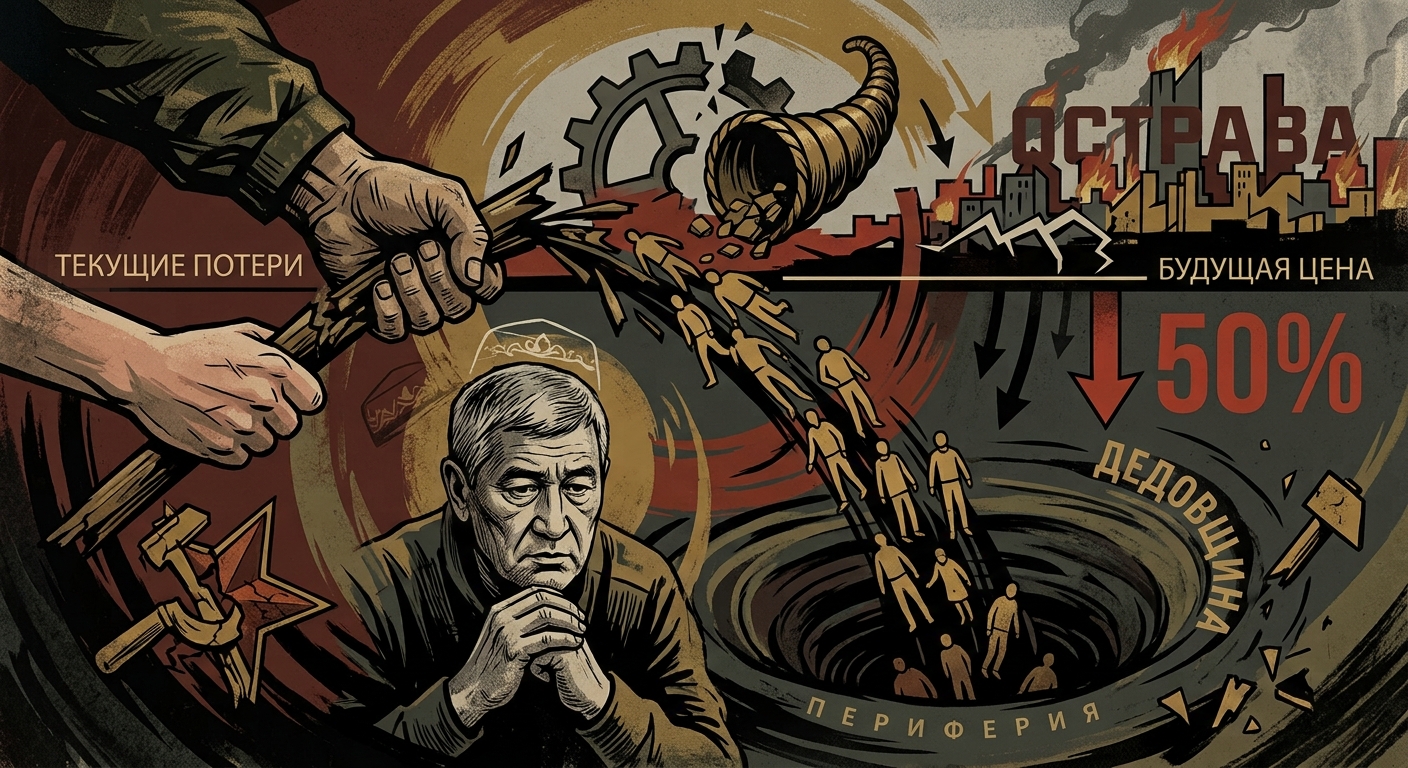
Worst of all is who paid this bill. Look at the personnel rolls of the 214th and the 219th, and then ask where these boys were called up from: mountain auls above the Terek, timber-cutter villages by Baikal, hunting camps and reindeer stations where the post arrives once every three weeks. Those were the men who went in the first wave through the minefields toward the Krzywoń-Górna rail line. In a mountain village of seventy households, losing a dozen young men means the school closes for good, the flocks go unshepherded next winter, and songs in the native tongue begin to fade. Their future was burned into Polish mud before they even reached the border stone.
And in the rear, where discipline should be rebuilt, the old rot is back — dedovshchina. Exhausted platoon leaders look the other way while broken “old-timers” from the March intake take their bitterness out on eighteen-year-olds. This is not toughening; it is decay from within. In the army I served in, brotherhood and iron discipline kept us alive against a real enemy. What I am seeing right now in the rear camps outside Kholmichany is not military pride, but the ugly collapse of desperate men biting their own.
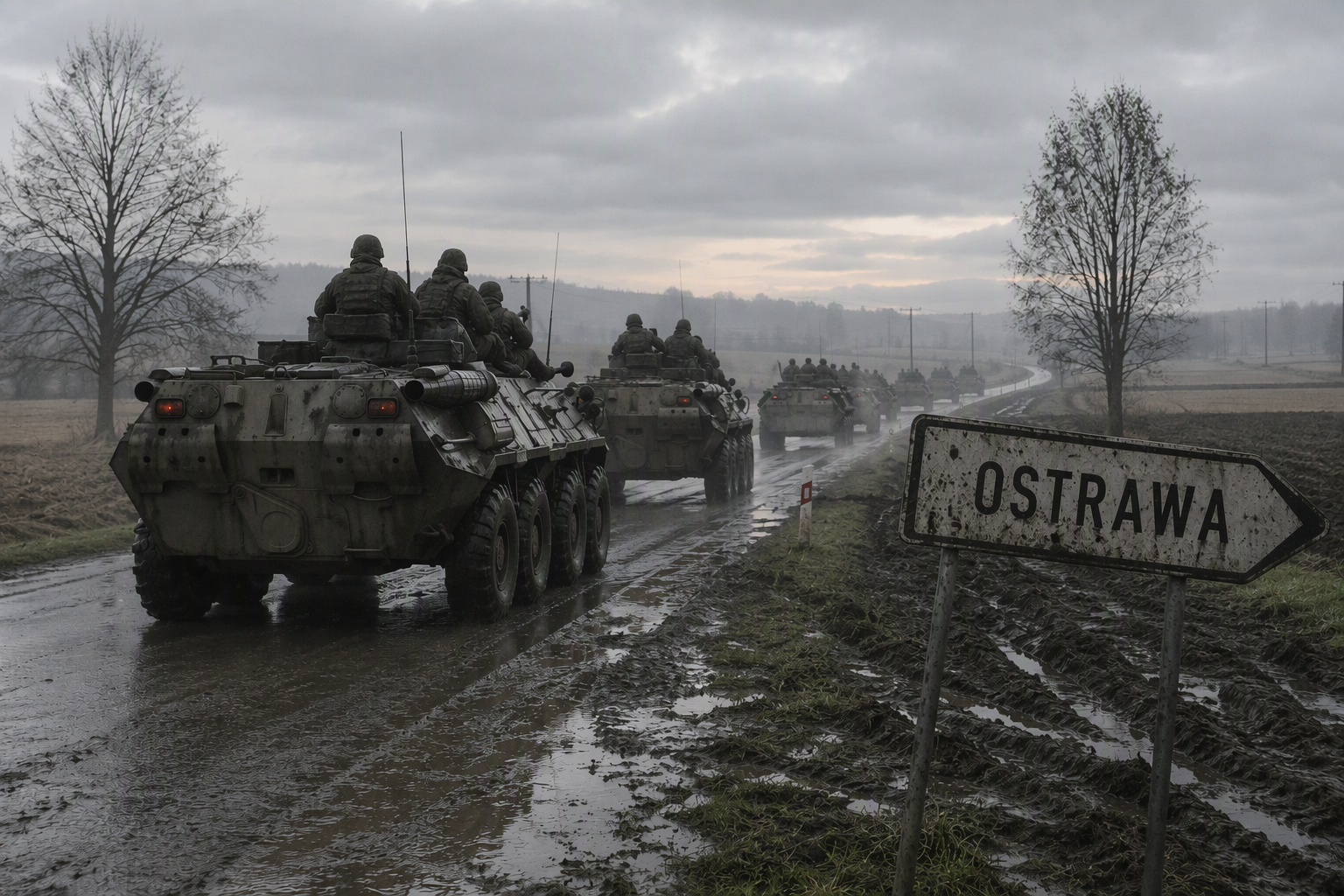
And past the checkpoint wire at Malý Roudnik, the Czechs and the open road to Ostrava are already waiting for us.
They are dug in, they are receiving reinforcements by rail, and they know we are coming. Taking Malý Roudnik, and Ostrava behind it, may look like a glorious line on a staff officer’s acetate, but at this rate we will take that city only by scraping the very bottom of our own periphery. If, to force the Moravian Gate, we spend our last working hands and our smallest peoples of Ocassus — what exactly do we bring home? Occupied land cannot save a nation that hollowed out its own soul and murdered its own youth to get there.